
Introduction
Of all the desserts in the world, few are as universally adored as baklava. This golden, syrup-soaked pastry, with its impossibly thin layers of phyllo, generous nuts, and fragrant syrup, has fans from Istanbul to New York. In Turkey, baklava is more than a dessert. It appears at celebrations, it is given as a gift, and it is made by pastry chefs who have spent their whole careers getting it right.
At Istanbul Restaurant Pattaya, we serve authentic Turkish baklava, a rarity in Thailand and a treat dessert lovers should not miss. Our Carrot Slice Baklava (Havuç Dilim Baklava) is the signature variety found in the finest Turkish pastry shops, and at ฿250, it is one of the most indulgent and memorable desserts you will find in Pattaya.
The History of Baklava
The origins of baklava are hotly contested. Turks, Greeks, Arabs, and Armenians all claim to have invented it. What is certain is that layered pastry desserts were present in the Ottoman Empire by the 15th century, and the imperial kitchens of Topkapi Palace were producing baklava at an extraordinary scale for royal celebrations. The tradition of baklava-making in Turkey reached its zenith in the city of Gaziantep (known as Antep), which today holds a European Union geographical indication for its pistachio baklava.
The Ramadan tradition of baklava is especially telling. During the holy month, the Ottoman sultans handed out baklava to the Janissaries (elite soldiers) in a grand ceremony known as the Baklava Alayı (Baklava Procession). It made baklava a symbol of prestige, generosity, and celebration that holds in Turkish culture to this day.
Types of Baklava
Carrot Slice (Havuç Dilim)
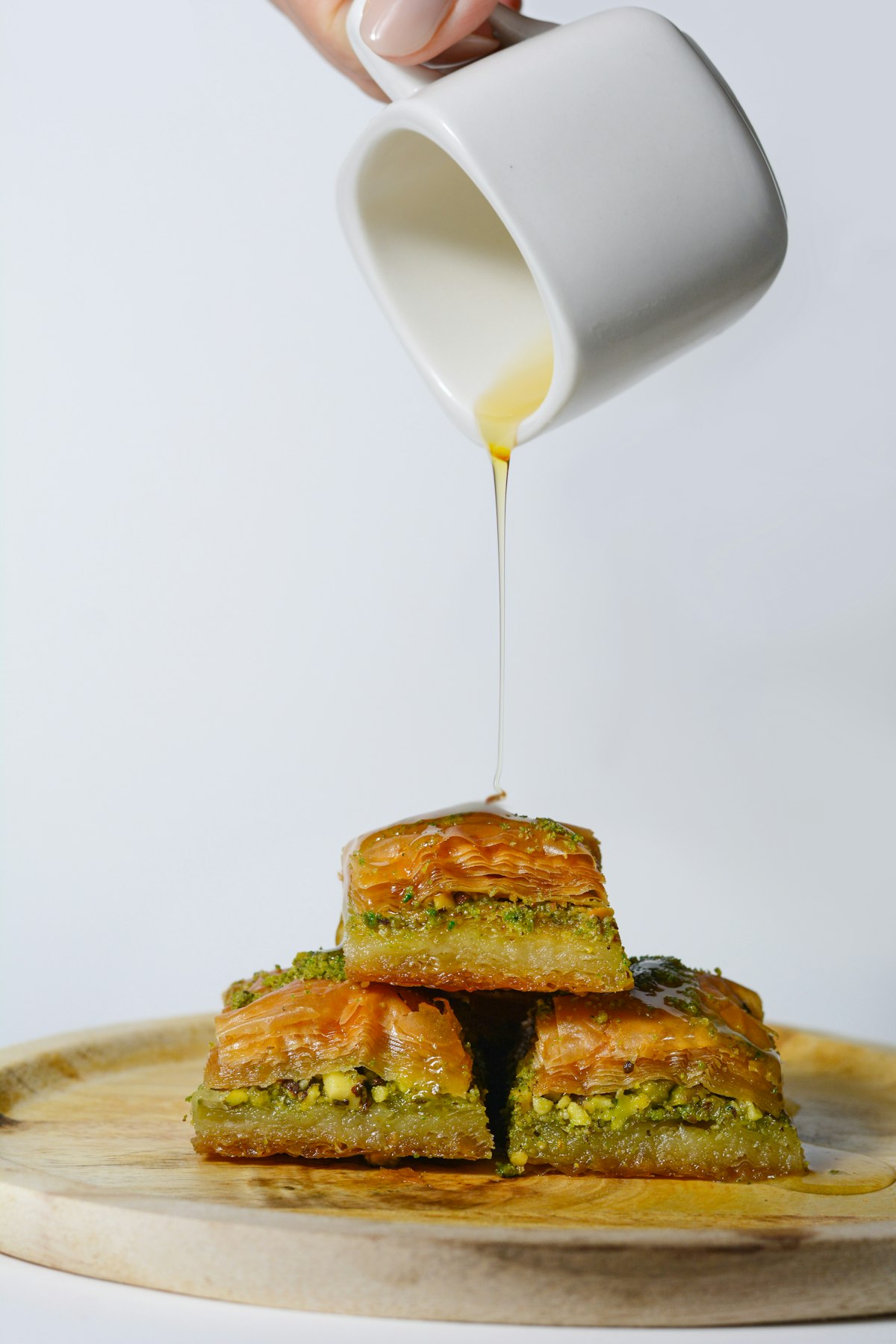
Named for its carrot-shaped triangular form, Havuç Dilim Baklava is the most prestigious and widely served variety in Turkey. Made with dozens of paper-thin phyllo layers, generously buttered, filled with ground pistachios, and soaked in a light sugar syrup, it is golden, crisp, and perfectly balanced between sweet and rich. This is what we serve at Istanbul Restaurant Pattaya.
Dry Baklava (Kuru Baklava)
A less syrup-soaked variety that emphasises the crunch of the pastry and the nuttiness of the filling. Popular for gifting and travel, as it has a longer shelf life.
Pistachio Baklava (Fıstıklı Baklava)
Made with whole or coarsely chopped pistachios and often distinguished by its vibrant green filling. The pistachios from Gaziantep are considered the world's finest for baklava, with a rich flavour and beautiful colour.
How Baklava is Made
Authentic baklava making is a labour of love. The process begins with phyllo dough, paper-thin sheets of pastry that must be rolled or stretched to near-translucent thinness. A single tray of baklava typically holds 30-40 layers of phyllo, each one brushed with clarified butter (not regular butter, which holds too much water). The nut filling, ground pistachios or walnuts, goes into the middle layers, and the whole tray is cut into its shapes before baking.
After baking to a deep golden colour, the hot baklava receives a generous pour of cold sugar syrup (or honey). The contrast between the hot pastry and cold syrup is what matters: it creates the soggy-crisp texture that makes great baklava so hard to put down. The syrup is typically flavoured with a squeeze of lemon and sometimes a little rose or orange blossom water.
The skill in baklava lies in achieving the right balance: enough syrup to make it moist and flavourful, but not so much that the pastry becomes soggy. The layers must be distinct and crisp, the nuts flavourful and generously applied. These are the hallmarks of the authentic Turkish baklava we serve at Istanbul Restaurant Pattaya.
Pairing Baklava with Turkish Tea or Coffee
In Turkey, baklava is almost always enjoyed with a hot drink, either a glass of Turkish tea (Çay, ฿40) or a small cup of Turkish coffee (Türk Kahvesi, ฿80). The bitterness of the tea or coffee offsets the sweetness of the baklava, clearing the palate between bites and lifting both flavours.
Turkish coffee, made by boiling finely ground coffee in a small copper pot (cezve) with water and optional sugar, is particularly complementary to baklava. The thick, intense coffee and the rich, sweet pastry create a combination that has been enjoyed in the coffeehouses of Istanbul for centuries.
Taste Authentic Baklava in Pattaya
Visit our desserts menu to see all sweet options, or order online via Grab.
Visit Istanbul Restaurant Pattaya
27/25 S Pattaya Rd, Bang Lamung District, Chon Buri 20150
Open Tuesday to Monday · 11:00 AM to 1:00 AM · Halal Certified